
Introduction
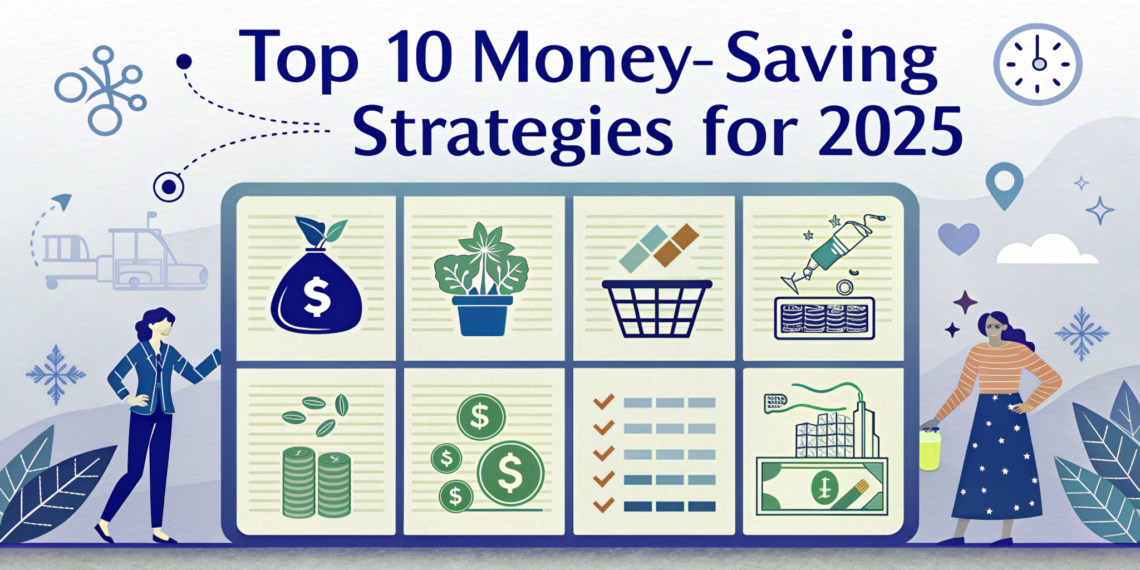
Money-saving strategies for 2025 are no longer optional—they are essential for anyone who wants to stay financially stable in a time of rising inflation, increasing living costs, and uncertain economic conditions. In 2025, everyday expenses such as groceries, utilities, transportation, and subscriptions continue to rise, making it harder for individuals and families to save money without a clear plan. The good news is that saving money doesn’t require extreme sacrifices or cutting all enjoyment from your life. It requires smart planning, consistent habits, and practical strategies that work in real life.
Many people struggle to save money because they rely on outdated advice or unrealistic expectations. Some try to save whatever is left at the end of the month—only to find there’s nothing left. Others create overly strict budgets that are impossible to maintain. Effective money-saving strategies for 2025 focus on balance: controlling spending while still allowing flexibility and comfort. When saving becomes automatic and intentional, it stops feeling stressful and starts feeling empowering.
Over the years, I’ve worked with individuals, couples, and families who believed they couldn’t save due to limited income or high expenses. In most cases, the issue wasn’t income—it was the absence of a clear saving system. Once they applied simple money-saving strategies like tracking expenses, automating savings, and cutting unnecessary recurring costs, they were able to save hundreds of dollars each month without major lifestyle changes. Small adjustments, when done consistently, create powerful long-term results.
Strategy 1 — Automate Your Savings
Why Automation Works
Automatically transferring a fixed amount to your savings ensures consistency and builds wealth over time.
Example: Jane set up a $200/month auto-transfer to her savings account, accumulating $2,400 in a year without thinking about it.
Strategy 2 — Track Every Expense
Use Apps or Spreadsheets
Track all income and spending to identify areas for improvement.
Mini Case Study: Mike used Mint to track expenses and found he could cut $150/month on subscriptions he rarely used.
Strategy 3 — Reduce Utility Bills
Energy & Water Savings
Switch to energy-efficient appliances, LED lights, and monitor water usage.
Negotiate Bills
Contact providers for discounts or lower rates.
Example: A family saved $50/month by negotiating their internet plan and reducing electricity usage.
Strategy 4 — Shop Smart and Avoid Impulse Buying
Use Lists & Set Budgets
Stick to grocery lists and shopping budgets.
Take Advantage of Discounts
Use coupons, cashback apps, and loyalty programs.
Mini Case Study: Sarah saved $300 in 3 months by planning purchases and using cashback apps.
Strategy 5 — Cook at Home More Often
Benefits
Reduces food costs, improves nutrition, and helps control portions.
Example: A single professional cut $400/month in dining expenses by meal prepping weekly.
Strategy 6 — Avoid High-Interest Debt
Prioritize Paying Off Credit Cards
High-interest debt erodes savings quickly.
Consider Consolidation
Combine multiple debts into lower-interest options.
Mini Case Study: John paid off a $5,000 credit card debt in 12 months using the debt snowball method, saving $600 in interest.
Strategy 7 — Buy Quality, Not Quantity
Invest in Durable Items
Saves money in the long run by avoiding frequent replacements.
Example: Purchasing a high-quality pair of shoes for $120 instead of $50 shoes every 3 months saved $80/year.
Strategy 8 — Use Public Transportation or Carpool
Reduce Commuting Costs
Fuel, maintenance, and parking expenses decrease.
Mini Case Study: A commuter saved $150/month by joining a carpool group.
Strategy 9 — Limit Subscriptions and Memberships
Audit Recurring Payments
Cancel services you rarely use.
Example: Mark canceled 4 unused streaming subscriptions, saving $60/month.
Strategy 10 — Set Clear Saving Goals
Make It Measurable
Short-term: $500 emergency fund
Long-term: $10,000 vacation or home down payment
Mini Case Study: Lisa created a 12-month plan to save $6,000 for a new car by setting aside $500/month.
Common Mistakes to Avoid When Saving Money
Not tracking small daily expenses.
Ignoring long-term goals while saving short-term.
Falling for impulse purchases.
Overcomplicating savings plans.
Relying solely on manual methods instead of automation.
FAQs About Money-Saving Strategies
Q1: How much should I aim to save each month?
A: Ideally 20% of your income, but adjust based on expenses and goals.
Q2: Can I save with a low income?
A: Yes, start small, automate, and focus on cutting discretionary expenses.
Q3: Are budgeting apps necessary for saving?
A: They’re very helpful, but you can also use spreadsheets or pen and paper.
Q4: How do I stay motivated to save?
A: Track progress visually, celebrate milestones, and automate to make saving effortless.
Q5: Should I prioritize paying debt or saving?
A: Pay off high-interest debt first, then focus on consistent saving.
Internal Linking Suggestions
Link to: Post 1: 7 Essential Money Management Tips for 2025
Link to: Post 4: How to Create a Smart Budget Plan in 2025
External References
NerdWallet: Money-Saving Strategies
Investopedia: Top Ways to Save Money