
Introduction
Monthly budget planning doesn’t have to be complicated or intimidating. In 2025, creating a monthly budget is easier than ever with digital tools and practical strategies that help you manage expenses, save money, and plan for the future.Creating a monthly budget doesn’t have to be complicated or intimidating. In 2025, budgeting is easier than ever with digital tools and practical strategies that help you manage expenses, save money, and plan for the future. Many people start budgeting but give up after a few weeks because their plans are too rigid or unrealistic.
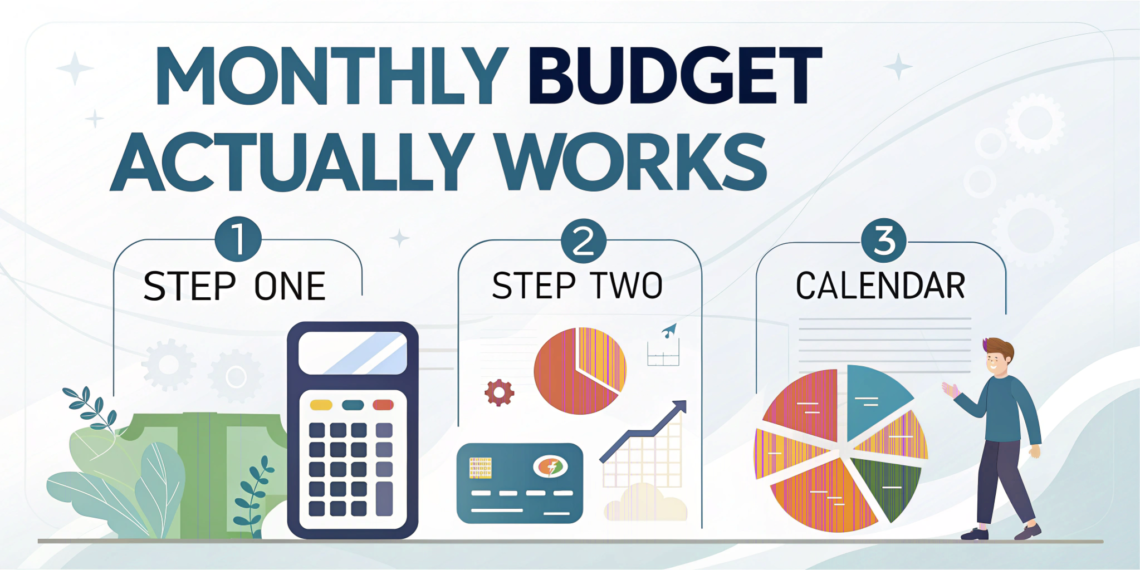
The key is to create a flexible, realistic monthly budget that adapts to your lifestyle and financial goals. In this guide, we’ll walk you through five simple steps to set up a monthly budget that actually works. From tracking income and expenses to setting priorities and adjusting as needed, these strategies are designed to help you gain control of your finances, reduce stress, and build long-term wealth — all without feeling overwhelmed.
Step 1 — Calculate Your Income
List All Sources: Include salary, freelance income, side hustles, and passive income
Use Net Income: Focus on money you actually take home after taxes
Tip: Keep income separate from windfalls like bonuses or gifts
Mini Case Study: John, a freelancer, tracked his varying monthly income and adjusted his spending, preventing overspending during low-income months
Step 2 — Track Your Expenses
H3: Fixed Expenses
Rent/mortgage, utilities, subscriptions, loan payments
Tip: Automate recurring payments to avoid late fees
Variable Expenses
Groceries, entertainment, transportation, dining out
Tip: Review bank statements or budgeting app reports for accuracy
Mini Example: Lisa used a spreadsheet to track all expenses for one month and discovered she was overspending on dining out by 25%
Step 3 — Set Budgeting Goals
Short-Term Goals: Emergency fund, vacation, gadgets
Medium-Term Goals: Paying off debt, home renovation
Long-Term Goals: Retirement savings, investment accounts
Tip: Assign a portion of your income to each goal; even small contributions add up
Example: Allocating $100/month toward an emergency fund helped Sarah save $1,200 in a year
Step 4 — Choose a Budgeting Method
50/30/20 Rule: 50% needs, 30% wants, 20% savings/debt
Zero-Based Budgeting: Every dollar has a purpose
Envelope System: Cash in envelopes for different spending categories
Tip: Pick a method that matches your financial personality and stick with it
Step 5 — Review and Adjust Regularly
Weekly Check-Ins: Track progress and adjust overspending
Monthly Review: Compare actual spending with budgeted amounts
Flexibility: Life changes, so adjust categories as needed
Mini Case Study: Mike reviewed his budget monthly and shifted funds from entertainment to savings when his utility bills increased
Common Mistakes to Avoid
Ignoring irregular expenses (gifts, car maintenance)
Overcomplicating the budget with too many categories
Not tracking spending consistently
Being too strict and abandoning the budget altogether
Failing to adjust when income or expenses change
FAQs About Monthly Budgeting
Q1: How much of my income should I save each month?
A: Aim for at least 20% if possible, adjusting based on personal goals and expenses.
Q2: Can I budget if my income varies each month?
A: Yes. Track average income and adjust variable expenses accordingly.
Q3: Should I use a spreadsheet or an app?
A: Both work — apps like Mint or YNAB automate calculations and tracking, while spreadsheets allow more customization.
Q4: How often should I update my budget?
A: Weekly check-ins and monthly reviews are recommended for accuracy and control.
Q5: Can budgeting help me pay off debt faster?
A: Absolutely. Allocating extra funds to debt repayment accelerates progress and reduces interest costs.
Internal Linking Suggestions
Link to: Post 1: Budget Planning for Beginners
Link to: Post 3: Top Budgeting Apps for 2025
External References
NerdWallet: Monthly Budget Planning Tips
Investopedia: How to Make a Monthly Budget