
Introduction
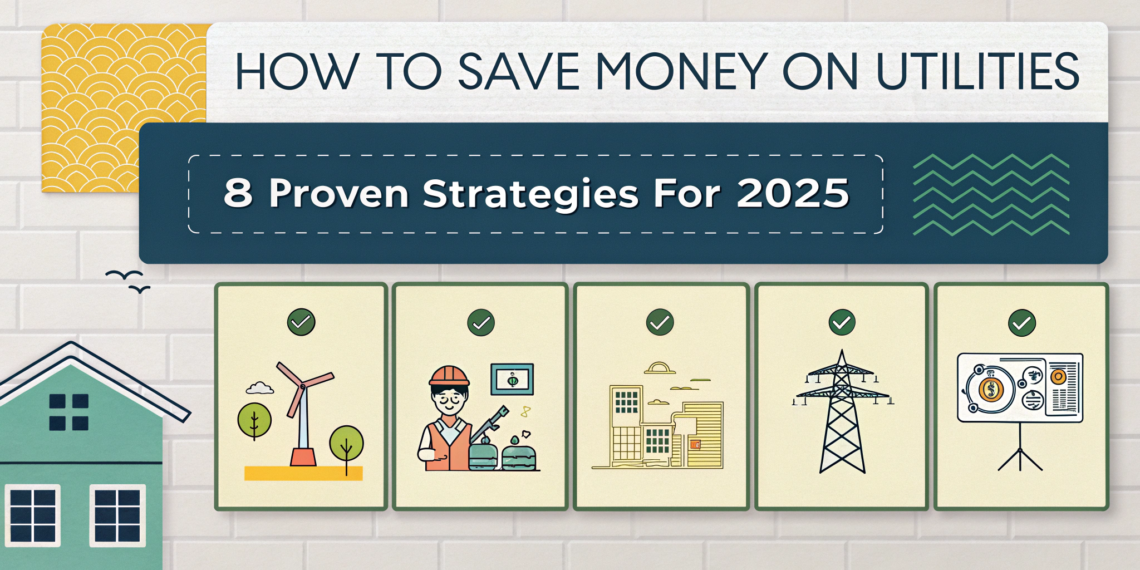
Saving money on utilities has become a top priority for households in 2025 as electricity, water, gas, and internet costs continue to rise. Utility bills can quietly consume a large portion of your monthly income if left unmanaged. Over the years, I’ve helped families implement small yet powerful changes that resulted in a 15–30% reduction in utility expenses—without sacrificing comfort or convenience.
From switching to energy-efficient appliances and installing smart home technology to adjusting everyday habits and closely monitoring usage, there are many practical ways to cut costs. This guide shares 8 proven strategies to save money on utilities in 2025, complete with real-world examples, mini case studies, and common mistakes to avoid. By applying these tips, you’ll not only lower your monthly bills but also build more sustainable and budget-friendly household habits.
Strategy 1 — Switch to Energy-Efficient Appliances
Look for ENERGY STAR Certified Products
Appliances with this certification consume less energy and reduce monthly bills.
Example: Replacing an old refrigerator with an ENERGY STAR model can save $50–$100 per year.
Strategy 2 — Use Smart Thermostats
Automate Heating and Cooling
Smart thermostats adjust temperature based on occupancy, reducing energy waste.
Mini Case Study: A family saved $200 annually after installing a Nest thermostat.
Strategy 3 — Monitor Water Usage
Install Low-Flow Fixtures
Showerheads, faucets, and toilets with low flow reduce water consumption.
Detect Leaks Early
A small leak can waste hundreds of gallons monthly.
Tip: Track water usage monthly to spot anomalies.
Strategy 4 — Switch Energy Providers
Compare Rates Online
Many regions allow multiple electricity or gas providers—shop for competitive rates.
Consider Renewable Energy Plans
Some plans offer lower rates for green energy users.
Strategy 5 — Adjust Daily Habits
Turn Off Unused Electronics
Computers, TVs, and lights left on unnecessarily increase bills.
Reduce Heating & Cooling Usage
Wear layers indoors, close curtains, and seal windows to maintain temperature.
Example: Turning off lights in unused rooms can save $100/year.
Strategy 6 — Use Smart Power Strips
Prevent Phantom Energy Loss
Many electronics consume power even when turned off. Smart power strips cut power automatically.
Mini Case Study: A household saved $60 annually using smart strips for home office devices.
Strategy 7 — Optimize Laundry & Dishwashing
Wash Full Loads Only
Reduces water and electricity consumption.
Use Cold Water for Laundry
Saves on heating water costs.
Tip: Air-dry clothes when possible to cut dryer usage.
Strategy 8 — Monitor and Analyze Usage
Use Apps & Smart Meters
Track electricity, gas, and water usage to identify spikes.
Set Budget Alerts
Many utility apps allow notifications when usage exceeds a set limit.
Example: Monitoring electricity usage led a family to reduce AC runtime by 2 hours/day, saving $120/year.
Common Mistakes When Reducing Utility Bills
Ignoring small leaks or phantom energy loss
Buying energy-efficient appliances but using them inefficiently
Not monitoring monthly bills to track progress
Focusing on one utility while ignoring others
Relying on habits without technology support
FAQs About Saving on Utilities
Q1: How much can I save on utilities yearly?
A: Most households can save 15–30% by combining efficient appliances, smart devices, and better habits.
Q2: Are smart thermostats really worth it?
A: Yes, they pay for themselves in 1–2 years through energy savings.
Q3: Can water-saving devices significantly reduce bills?
A: Absolutely, especially in households with high water consumption.
Q4: Should I switch energy providers often?
A: Review rates annually to ensure you’re getting the best deal.
Q5: How do I track my energy usage effectively?
A: Use smart meters, utility apps, and monthly bill comparisons.
Internal Linking Suggestions
Link to: Post 2: Budget-Friendly Energy Hacks at Home
Link to: Post 1: Simple Tips to Lower Monthly Bills
External References
Energy.gov: Save Energy & Money
EPA: WaterSense Program