
Introduction
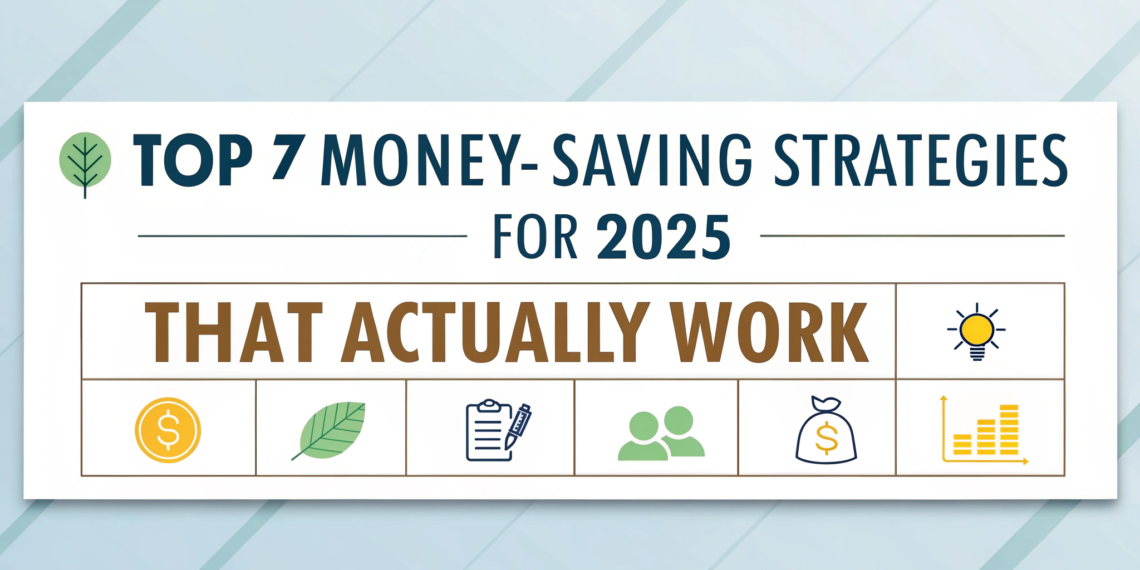
Money-saving strategies for 2025 have become essential as rising inflation, increasing living costs, and changing spending habits continue to put pressure on personal finances. From higher grocery bills and utility costs to subscriptions, digital payments, and lifestyle expenses, many people struggle to understand where their money goes each month. While saving money may feel difficult in today’s economy, the reality is that smart, consistent actions can create meaningful financial improvements over time.
In 2025, saving money is no longer about extreme budgeting or cutting out everything you enjoy. Instead, it’s about using practical, realistic money-saving strategies that actually work with your lifestyle. Many people fail to save because they rely on willpower alone or follow trendy financial hacks that aren’t sustainable. The most successful savers focus on awareness, automation, and long-term habits rather than short-term sacrifices.
Over the years, I’ve helped individuals, families, freelancers, and professionals apply money-saving strategies for 2025 that fit their real-life situations. In almost every case, the issue wasn’t income—it was unmanaged spending. Small expenses like impulse purchases, unused subscriptions, dining out frequently, or failing to track daily spending slowly drain finances without being noticed. Once these habits are identified and corrected, saving money becomes far more achievable.
Strategy 1 — Track Your Spending
Monitor Every Expense
Record every purchase using apps like Mint or YNAB.
Mini Case Study: Sarah tracked her daily coffee and dining out expenses and cut $150/month by making small adjustments.
Tip: Categorize expenses as “Needs” vs “Wants” to identify unnecessary spending.
Strategy 2 — Automate Savings
Use Automatic Transfers
Set up monthly transfers to savings or investment accounts.
Example: Alex automated $300/month to a high-yield savings account, accumulating $3,600 in a year effortlessly.
Tip: “Pay yourself first” to make saving non-negotiable.
Strategy 3 — Reduce Recurring Bills
Review Subscriptions
Cancel unused streaming services, gym memberships, or software.
Negotiate Bills
Call providers to request discounts or switch to cheaper plans.
Mini Case Study: A freelancer cut $80/month in unnecessary subscriptions after auditing recurring payments.
Strategy 4 — Smart Grocery and Meal Planning
Plan Weekly Meals
Make a shopping list to avoid impulse buys.
Buy in Bulk & Use Coupons
Take advantage of discounts for non-perishable items.
Example: Meal prepping helped a family save $250/month on groceries.
Strategy 5 — Use Cash-Back and Reward Programs
Credit Card Rewards
Use cards with cash-back or points for regular expenses.
Online Shopping Extensions
Tools like Rakuten or Honey provide cash-back and discounts automatically.
Mini Case Study: John earned $400 in rewards in a year by strategically using cashback programs.
Strategy 6 — Minimize Impulse Purchases
24-Hour Rule
Wait 24 hours before buying non-essential items.
Avoid Window Shopping
Unsubscribe from promotional emails and turn off push notifications.
Tip: Track how impulse purchases affect your monthly budget.
Strategy 7 — Invest in Financial Education
Learn Basic Investing
Knowledge about stocks, bonds, or mutual funds increases long-term savings.
Attend Webinars & Read Guides
Free online resources, blogs, and podcasts help you stay informed.
Mini Case Study: A young professional used free investment courses to start investing $200/month, growing a small portfolio within a year.
Common Money-Saving Mistakes to Avoid
Ignoring small expenses that add up over time.
Not automating savings, leading to inconsistent results.
Cutting essentials excessively, creating financial stress.
Following “trendy” hacks that don’t fit your lifestyle.
Failing to track progress or adjust strategies.
FAQs About Money-Saving Strategies
Q1: How much should I aim to save each month?
A: Aim for at least 20% of your income or adjust based on goals.
Q2: Are cash-back programs worth it?
A: Yes, when used responsibly and without overspending.
Q3: Can I save money on a tight budget?
A: Absolutely. Focus on tracking expenses, reducing waste, and automating savings.
Q4: Should I cut all luxuries to save more?
A: No. Balance is key—cut non-essential expenses without compromising quality of life.
Q5: How long before I see results from these strategies?
A: Most people see noticeable savings within 1–3 months with consistent implementation.
Internal Linking Suggestions
Link to: Post 1: 10 Essential Financial Planning Tips for 2025
Link to: Post 4: How to Build a Budget That Works in 2025
External References
Investopedia: Money-Saving Tips
NerdWallet: Best Money-Saving Strategies