
Introduction
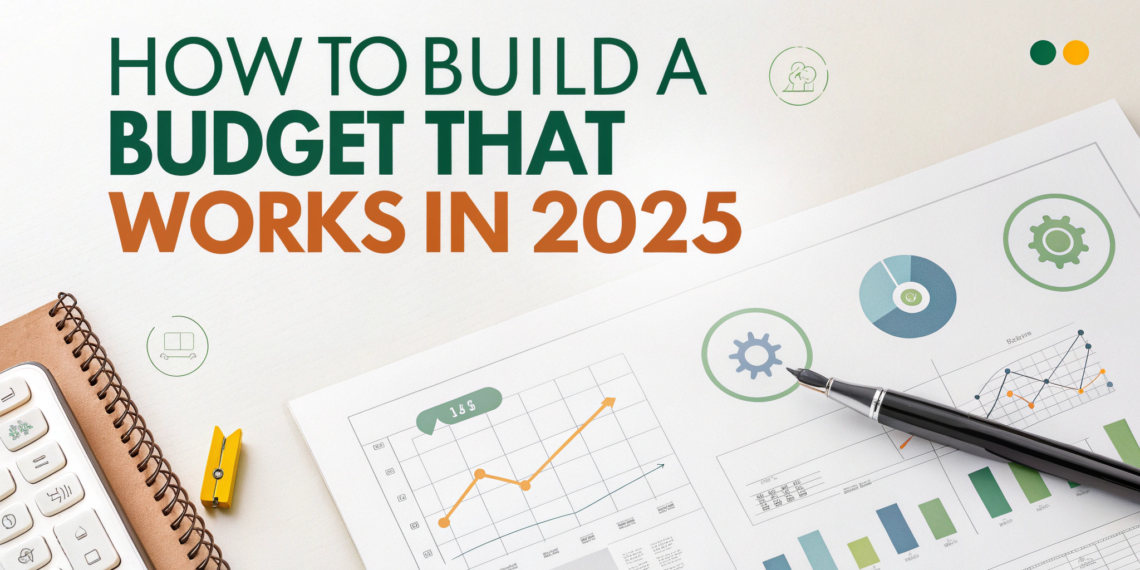
How to build a budget that works in 2025 is a crucial skill for managing money, reducing stress, and achieving long-term financial stability.Creating a budget that actually works can feel overwhelming, especially with rising living costs and fluctuating income. Yet, a well-designed budget is the cornerstone of financial stability, savings growth, and debt reduction.
Over the years, I’ve guided clients—from freelancers to families—through budgeting methods that are practical, easy to maintain, and tailored to their lifestyle. The goal isn’t to restrict spending completely, but to allocate resources wisely so you can cover necessities, save for the future, and still enjoy life. In this guide, you’ll discover a clear, step-by-step approach to building a budget in 2025, complete with tips, real-life examples, mini-case studies, and common pitfalls to avoid. Whether you’re starting your first budget or optimizing an existing one, these strategies will help you stay in control of your finances.
Step 1 — Assess Your Income and Expenses to Build a Budget That Works
Calculate Total Income
Include salary, freelance income, side hustles, and passive income.
Track Your Expenses
Categorize spending: fixed (rent, bills) vs variable (entertainment, dining).
Mini Case Study: Rachel tracked her expenses for one month and discovered she was overspending $200 on subscriptions she didn’t use.
Step 2 — Set Financial Goals
Short-Term Goals
Emergency fund, vacation, paying off small debts.
Long-Term Goals
Retirement, home purchase, children’s education.
Tip: Goals should be Specific, Measurable, Achievable, Relevant, Time-bound (SMART).
Step 3 — Choose a Budgeting Method
50/30/20 Rule
50% needs, 30% wants, 20% savings & debt repayment.
Zero-Based Budgeting
Assign every dollar a purpose—income minus expenses = $0.
Envelope System
Allocate cash for categories to control spending physically or digitally.
Mini Case Study: Mike switched to zero-based budgeting and paid off $3,500 in credit card debt in 6 months.
Step 4 — Automate Savings and Payments
Automatic Transfers
Schedule transfers to savings, investments, and bill payments.
Tip: Automation reduces missed payments and builds savings consistently.
Example: Lisa automated $400/month to her emergency fund and reached $4,800 in one year.
Step 5 — Monitor and Adjust Your Budget
Track Spending Weekly
Use apps like Mint, YNAB, or spreadsheets.
Review Monthly
Adjust for changes in income or expenses and refine your allocations.
Mini Case Study: John reviewed his budget monthly and reallocated $150 from dining to savings each month.
Common Budgeting Mistakes to Avoid
In 2025, rising inflation, subscription-based spending, and fluctuating income make budgeting more important than ever. Without a clear plan, money can disappear quickly without delivering real value. A working budget helps you stay proactive instead of reactive, ensuring your financial decisions align with your goals. When you understand exactly where your money goes, you gain confidence, control, and the ability to plan for both short-term needs and long-term success.
Overestimating savings potential or underestimating expenses.
Ignoring irregular expenses like car maintenance or annual subscriptions.
Rigid budgets that don’t allow flexibility.
Not tracking actual spending vs budgeted amounts.
Failing to revisit goals or adjust the plan as circumstances change.
FAQs About Budgeting
Q1: How often should I review my budget?
A: Weekly for tracking, monthly for adjustments.
Q2: Should I include debt payments in my budget?
A: Yes, prioritize high-interest debts to reduce financial strain.
Q3: What’s the best app for budgeting in 2025?
A: Mint, YNAB (You Need a Budget), and PocketGuard are highly recommended.
Q4: Can I budget if I have irregular income?
A: Absolutely. Base your budget on the minimum expected income and allocate surplus when earned.
Q5: How much should I save each month?
A: Aim for 20% of net income, adjusting based on goals and expenses.
Internal Linking Suggestions
Link to: Post 1: 10 Essential Financial Planning Tips for 2025
Link to: Post 3: 5 Smart Saving Strategies for 2025
External References
NerdWallet: Budgeting Tips for 2025
Investopedia: Guide to Budgeting