
Introduction
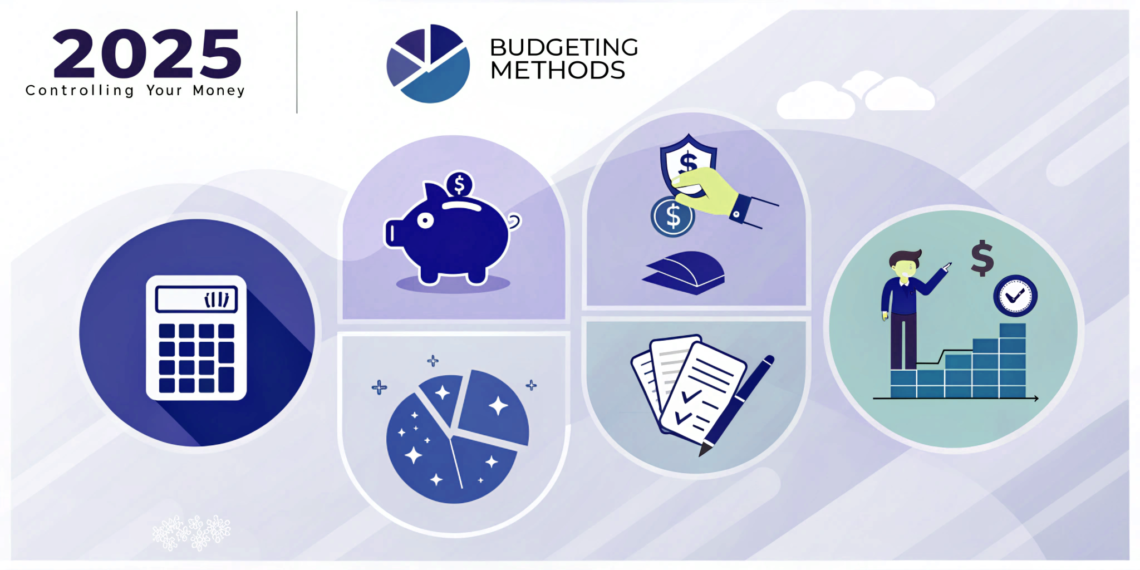
Budgeting methods are essential in 2025 for anyone who wants to control their money without feeling restricted. Using the right budgeting methods helps you manage expenses, reduce financial stress, and align spending with your long-term goals. Instead of cutting joy from your lifestyle, smart budgeting methods allow you to spend intentionally while still saving consistently.
Over the years, I’ve helped individuals and small business owners apply simple budgeting methods that actually work in real life. In this guide, you’ll learn five proven budgeting methods, complete with step-by-step instructions, practical examples, and common mistakes to avoid. Whether you’re new to budgeting or refining your financial habits, these methods will help you take full control of your money in 2025.
H2: 1. The 50/30/20 Rule
H3: How It Works
50% of income → Needs (rent, groceries, bills)
30% of income → Wants (entertainment, dining out)
20% of income → Savings & debt repayment
H3: Benefits
Simple, easy to follow, and ensures balance between essentials, fun, and saving.
Mini Case Study: Lisa used the 50/30/20 rule and paid off $4,000 in credit card debt while still enjoying her hobbies.
2. Zero-Based Budgeting
How It Works
Every dollar of income is assigned a purpose—expenses, savings, or investments.
Why It Works
Forces conscious spending and eliminates waste.
Example: A freelancer allocated $0 left unassigned, maximizing saving and eliminating unnecessary subscriptions.
3. Envelope System (Cash-Based Budgeting)
How It Works
Cash is divided into envelopes for each spending category. When money runs out, no more spending in that category.
Best For
Controlling discretionary spending and avoiding impulse purchases.
Mini Case Study: Mark limited his dining-out budget using envelopes and saved $200/month.
4. Percentage-Based Budgeting
How It Works
Allocate fixed percentages to different categories (e.g., 30% rent, 20% groceries, 15% savings).
Why It Works
Flexible and adaptable to changing income levels.
Example: A remote worker adjusted percentages each month based on gig earnings, staying on track with savings goals.
5. Priority-Based Budgeting
How It Works
Prioritize essential financial goals first—debt repayment, emergency fund, retirement contributions—then allocate leftover income to discretionary spending.
Benefits
Ensures long-term financial stability while still allowing flexibility.
Mini Case Study: Jenna paid off student loans in 3 years by focusing first on debt and savings before splurging on luxuries.
Common Budgeting Mistakes to Avoid
Ignoring irregular or seasonal expenses.
Setting unrealistic budgets that are impossible to follow.
Forgetting to review and adjust monthly.
Failing to track small daily expenses, which add up.
Over-relying on apps without understanding your finances.
FAQs About Budgeting Methods
Q1: Which budgeting method is best for beginners?
A: The 50/30/20 rule is simple and effective for most beginners.
Q2: Can I combine methods?
A: Yes, you can use zero-based budgeting for essentials while using envelope system for discretionary spending.
Q3: How often should I update my budget?
A: Monthly reviews are ideal to adjust for income changes or unexpected expenses.
Q4: What if I fail to stick to the budget?
A: Don’t get discouraged—analyze where you overspent and adjust for the next month.
Q5: Are budgeting apps necessary?
A: Apps help track spending and categorize expenses, but manual tracking can work too.
Internal Linking Suggestions
Link to: Post 1: Mastering Money Management: 7 Practical Tips for 2025
Link to: Post 4: Saving Strategies That Really Work in 2025
External References
NerdWallet: Budgeting Tips
Investopedia: Budgeting Methods Explained